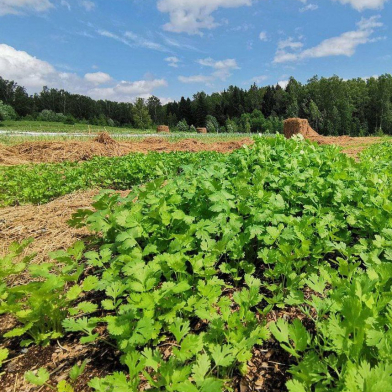
Organic Farm Planning
A successful organic farm begins with a well-structured plan. CropCircle Grow helps explain the key components of farm planning, including land evaluation, crop rotation, production scheduling, infrastructure requirements, labor planning, storage, packaging, and distribution.
We support thoughtful decisions about the type of farm that best suits a specific location and market. Depending on available land, climate, water, budget, and customer demand, a producer may consider seasonal vegetables, perennial crops, herbs, edible flowers, mushrooms, microgreens, or mixed farming systems.
Our approach emphasizes realistic planning. We encourage farmers to begin with manageable production areas, test their ideas, monitor demand, and expand gradually when operations become stable. This reduces unnecessary risk and allows producers to improve their systems over time.
Soil Health and Natural Fertility
Healthy soil is one of the most valuable assets on any farm. CropCircle Grow highlights practical strategies for maintaining soil structure, biological activity, moisture retention, and natural fertility.
These strategies may include:
- Compost and well-managed organic matter.
- Cover crops that protect soil between production cycles.
- Mulching to reduce evaporation and weed pressure.
- Crop rotation to support balanced nutrient use.
- Reduced soil disturbance where appropriate.
- Natural habitat for beneficial insects and microorganisms.
- Careful management of irrigation and drainage.
Good soil management can support stronger crops and improve the farm’s ability to withstand changing weather conditions. Soil should be treated as a living system rather than an inert growing medium. Regular observation, testing, and record keeping help farmers understand what their land needs and prevent avoidable problems.
Sustainable Crop Production
CropCircle Grow provides ideas for producing vegetables, fruits, herbs, and other crops with responsible resource management. We focus on crop selection, seasonal planning, spacing, seed quality, integrated pest management, irrigation efficiency, harvesting, and post-harvest handling.
Sustainable production is based on prevention and balance. Farmers can reduce crop losses by selecting varieties suited to local conditions, improving airflow, maintaining clean growing areas, and encouraging beneficial organisms. Monitoring fields regularly allows problems to be identified before they become expensive or difficult to control.
We also recognize the importance of crop diversity. A diversified farm may be better positioned to respond to changes in weather, market demand, and seasonal production. Mixed crops can also create a more attractive environment for pollinators and beneficial wildlife when planned carefully.
Greenhouse and Protected Agriculture
Greenhouses, tunnels, shade structures, and other protected growing systems can help extend the growing season and improve control over production conditions. CropCircle Grow explores how growers can use protected agriculture to produce herbs, leafy greens, seedlings, tomatoes, peppers, strawberries, flowers, and specialty crops.
Effective protected cultivation requires attention to ventilation, temperature, humidity, light, irrigation, growing media, plant spacing, sanitation, and energy use. A greenhouse should be planned according to the crops and climate rather than treated as a universal solution.
Small growers may benefit from simple structures and efficient workflows, while larger operations may require automated climate control, fertigation systems, climate sensors, and specialized logistics. We encourage producers to compare installation costs, maintenance needs, expected yields, and market prices before investing.
Farm-to-Market Strategies
Producing high-quality food is only one part of a successful agricultural business. Farmers also need reliable ways to reach customers. CropCircle Grow covers farm-to-market strategies such as local markets, farm shops, restaurants, food cooperatives, online ordering, subscription boxes, wholesalers, and direct delivery.
A strong market strategy begins with understanding customer expectations. Buyers may value freshness, traceability, local production, seasonal variety, convenient packaging, or specific certifications. Clear communication helps customers understand the value of responsibly produced food.
We also emphasize consistency. A farm business should consider whether it can meet expected volumes, maintain quality, deliver on time, and respond professionally to customer questions. Building long-term relationships often creates more stable opportunities than relying only on occasional sales.
Value-Added Agricultural Products
Farmers can often increase the value of their production by developing carefully planned products such as dried herbs, preserves, sauces, juices, herbal blends, baked goods, natural cosmetics, or packaged specialty foods. CropCircle Grow explores the principles behind value-added agriculture, including product selection, branding, packaging, food safety, labeling, pricing, and distribution.
Value-added products should be developed according to customer demand and the farm’s real capabilities. A successful product requires more than an attractive label. It must be safe, consistent, legally compliant, easy to store, and financially viable.
Farm Management and Agricultural Technology
Modern farm management can benefit from practical digital tools. CropCircle Grow discusses technologies that may help producers organize planting schedules, track expenses, monitor field conditions, manage inventory, analyze yields, and improve communication with customers.
Useful tools may include:
- Digital farm records.
- Weather and soil monitoring devices.
- Irrigation timers and moisture sensors.
- Inventory management systems.
- Online ordering platforms.
- Customer relationship tools.
- Mapping and field-planning applications.
- Digital accounting and budgeting systems.
Technology should simplify work and improve decisions. Farmers do not need to adopt every new tool. The most valuable system is usually the one that solves a specific problem, is affordable to maintain, and can be used consistently by the people managing the farm.
Agricultural Education and Community Engagement
CropCircle Grow also supports the educational side of agriculture. Workshops, farm visits, community gardens, school programs, and practical demonstrations can help people understand where food comes from and why responsible farming matters.
Education can strengthen trust between producers and consumers. It can also inspire young people to explore careers in farming, agronomy, food processing, environmental management, agricultural technology, and rural entrepreneurship.